
What Is Scuba Diving?
Scuba diving allows you to breathe underwater using a self-contained underwater breathing apparatus. That’s what SCUBA stands for. With a tank, regulator, mask, fins, and buoyancy control device, you move freely beneath the surface and explore a world most people only see in documentaries.
It is not extreme. It is not reckless. It is controlled, trained, and surprisingly calm.
A Brief History
Modern scuba diving began in the 1940s when Jacques Cousteau and engineer Émile Gagnan developed the Aqua-Lung, the first practical open-circuit breathing system. That invention made recreational diving possible.
Since then, scuba has evolved into a global sport with millions of certified divers exploring reefs, wrecks, caves, and open ocean ecosystems.
What began as exploration became recreation. What began as equipment became freedom.
How Do You Get Certified?
To dive safely, you need certification. The two most recognized training agencies are:
Both offer beginner certifications that include:
Online or classroom learning
Pool training sessions
Open water checkout dives
Most entry-level certifications can be completed in a few days during a vacation or over a few weekends at home.
Once certified, you can dive anywhere in the world within recreational depth limits.
Is Scuba Diving Safe?
This is the biggest question.
Scuba diving is extremely safe when done within training limits and with proper equipment. You are taught:
How to control your breathing
How to equalize pressure
How to manage buoyancy
How to handle unlikely emergency scenarios
The training is structured and methodical. Nothing is rushed. You build confidence step by step.
For many people, the fear comes from the unknown. Once underwater, most divers describe the opposite feeling: Calm, weightless, and present.
Why People Fall in Love With It
Scuba diving is not just about fish.
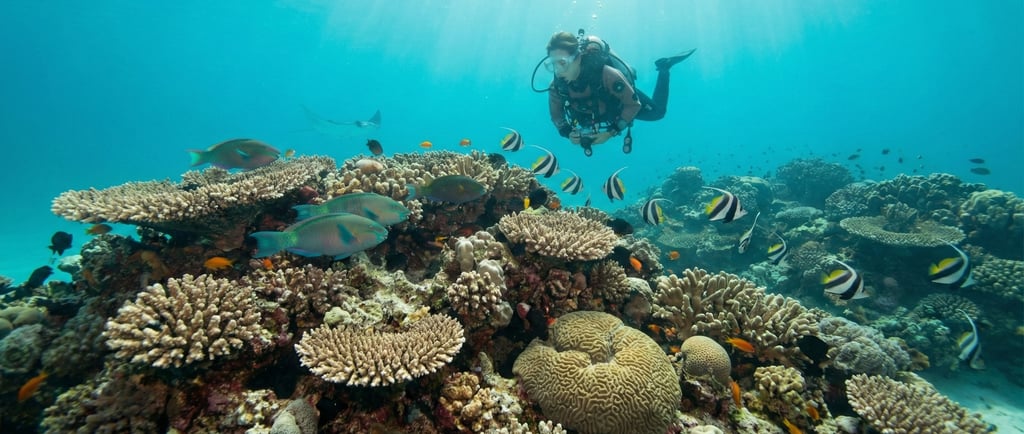
It is about suspension. You are floating, not walking. Breathing slowly. Watching light filter down in blue columns. The surface noise disappears.
Time feels different underwater.
You notice small things. A turtle passing without urgency. Coral moving with current. The quiet sound of your own breath.
For some, it is adventure.
For others, it is therapy.
For many, it becomes both.
What You Actually Need
Basic scuba gear includes:
Mask
Fins
Regulator
Tank
Buoyancy control device
Exposure suit depending on water temperature
Most beginners rent gear at first. As you dive more, you slowly build your own setup.
Who Is It For?
You do not need to be an elite athlete. You need basic swimming ability, reasonable comfort in water, and curiosity.
Scuba diving is for:
Travelers
Ocean lovers
People seeking perspective
Anyone who wants to experience something completely different from daily life
The Bottom Line
Scuba diving takes you somewhere few people go.
It is not loud. It is not chaotic. It is immersive and surprisingly peaceful.
If you are scared, that is normal. Almost everyone is before their first dive. But beneath the surface is an entirely different world waiting quietly.
And once you see it, it stays with you.
Dive


Moments beneath the waves that take your breath away
“The sea, once it casts its spell, holds one in its net of wonder forever.”
- Jacques-Yves Cousteau

